First steps
L.K.G. – U.K.G. · Pre-primary
A gentle, language-rich start. Children listen to stories, sing, draw, count with objects and learn to sit and work together. Pre-writing and early number work grow out of play rather than pressure.
कक्षाएँ एवं पाठ्यक्रम · Academics
Every subject at Gyan Sarovar is taught in Hindi, with English taught as a language from the early years. Learning in the mother tongue lets children build ideas before they juggle a second language.
Hindi medium, by design
Learning in Hindi is not a limitation. It is a starting point. When a child can follow an idea in the language they speak at home, they can question it, argue with it and make it their own.
English is taught as a language from the earliest classes and used increasingly as children grow. By the senior classes, students read and write in both languages.
Across every stage, teachers are expected to explain carefully, check for understanding and give a child more than one way into a lesson.
पहले समझना, फिर परखना, फिर अपनाना।
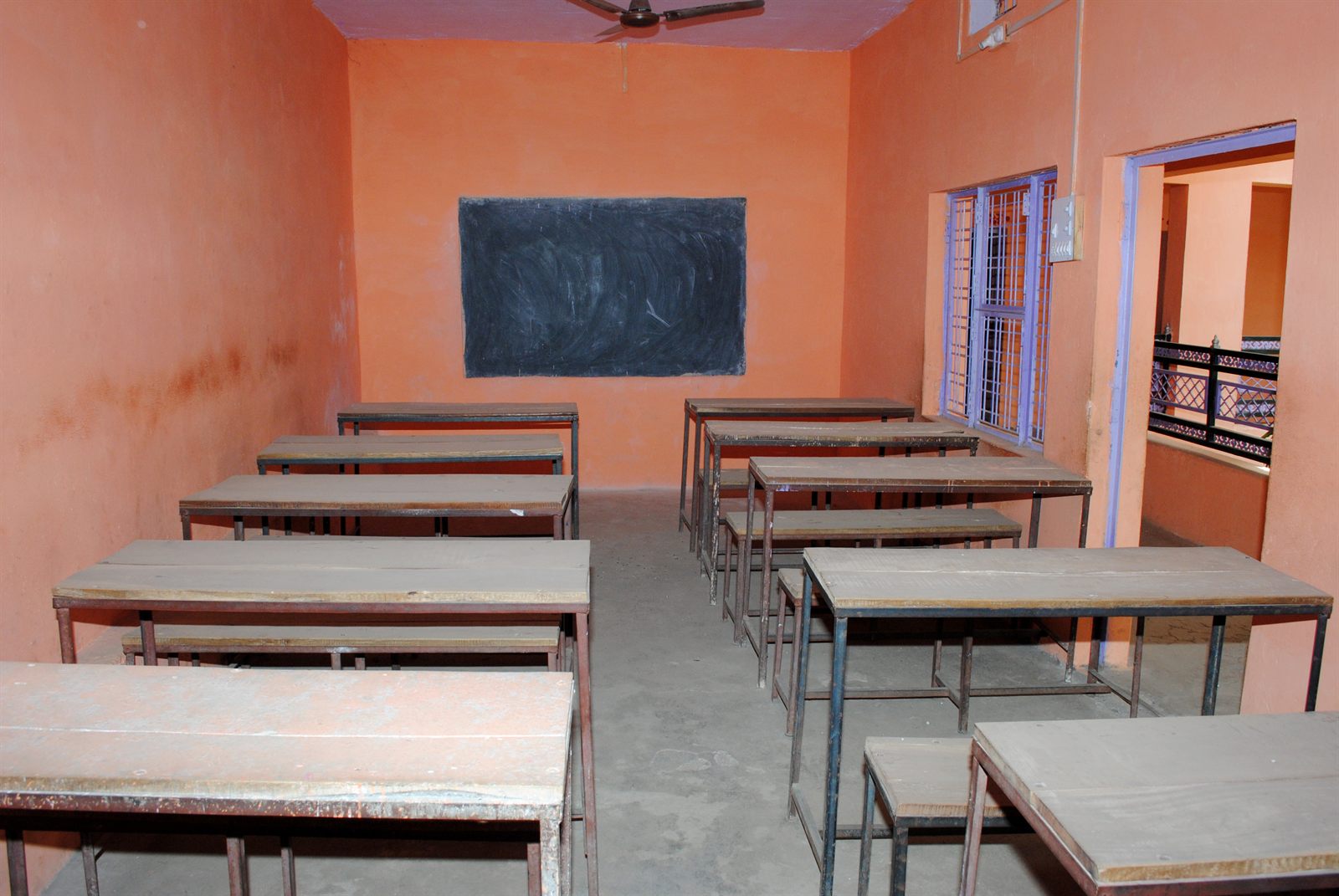
A classroom at the school, set for the day's lessons.
एक विद्यालय, पाँच चरण
Our curriculum moves in five stages, each with its own rhythm and expectations. The aim at every stage is the same: understanding, not accumulation.
L.K.G. – U.K.G. · Pre-primary
A gentle, language-rich start. Children listen to stories, sing, draw, count with objects and learn to sit and work together. Pre-writing and early number work grow out of play rather than pressure.
Class I – V · Primary
Children become readers and writers in Hindi, begin English with confidence, and build number sense through practice and explanation. Environmental studies connects them to the world around Atru.
Class VI – VIII · Middle
Subjects widen and thinking gets more structured. Children learn to read for information, write at length, handle ideas in science and social science, and work on projects with classmates.
Class IX – X · Secondary
The first board milestone. Teaching becomes more deliberate: clear explanations, regular revision, written practice and individual attention where it is needed.
Class XI – XII · Senior secondary
The arts stream is for students who want to understand people, places and ideas. Reading, discussion and written expression sit at the centre of the work, with drawing and painting for those who choose it.
How we teach
Good teaching is mostly unglamorous. It is preparation, explanation, practice and attention — repeated with care.
Concepts are explained in the language children think in. English is introduced steadily, not at the cost of understanding.
Regular classwork, recitation, projects and periodic tests help learning settle in rather than pile up before an exam.
Drawing, music and performance are part of the timetable, not an afterthought at the end of the day.
We look at a child's work over time: class participation, written work, projects, performances and periodic assessments. Parent-teacher conversations help join up what the school sees with what the family sees at home.
Board examinations are taken at the end of Class X and Class XII, as per the prescribed curriculum. Preparation for them is part of the normal school year, not a separate scramble.
Morning assembly, music, drawing, yoga, sport, national days and festivals give children other ways to learn and belong. The annual utsav is the high point of the year — planned, rehearsed and performed by students.
Classrooms are on one campus from L.K.G. to Class XII, so older students and younger children share the same courtyards, corridors and sense of occasion.
Questions about a class?
If you are unsure which class your child should join, or want to know more about the arts stream, the school office can help.